Work
Ford Madox Brown

📌 Pin it
In the centre of the canvas, navvies dig up Heath Street, Hampstead, laying a drain — real labourers Brown had watched on his walk to his studio, painted life-size and without flattery. Around them swirls the whole Victorian world of work: a flower-seller, a sandwich-board man, ragged children, a policeman, and at the right, the 'brainworkers' — Thomas Carlyle himself, whose book Past and Present inspired the picture, beside the Reverend F. D. Maurice, founder of the Working Men's College.
Brown called the navvies the constructors of the modern world, and he meant it as theology as much as sociology: honest labour, in Carlyle's phrase, was the gospel of the age. The painting took thirteen years to finish, from 1852 to 1865; its buyer, Thomas Plint, died in 1861 before it was complete.
At nearly two metres wide, Work is the Victorian age's great group portrait of itself — not kings or beauties, but the men with shovels, and the thinkers who believed the shovel was sacred. Manchester, the workshop of the world, was the right home for it.
Frequently asked
What is Ford Madox Brown's Work about?
The dignity of labour: navvies digging a drain in Hampstead are painted as the heroes of the modern world, watched by the 'brainworkers' Thomas Carlyle and F. D. Maurice.
Why did Work take thirteen years?
Brown painted it between 1852 and 1865 alongside other commissions, reworking it repeatedly; his buyer Thomas Plint died in 1861 before it was finished.
Where is Work?
Manchester Art Gallery — the Manchester version; Brown painted a second, smaller version now in Birmingham.
Why it matters today
Work made manual labour a fit subject for high art — the ancestor of every mural, photograph and film that treats a working day as heroic.
More in Art & Painters
All →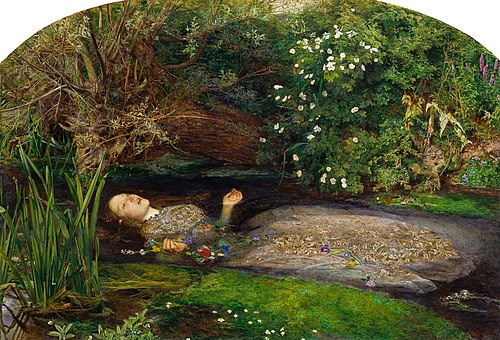
Ophelia
A drowned Shakespearean heroine, painted leaf by leaf on a Surrey riverbank — the image that made the Pre-Raphaelites immortal.

The Lady of Shalott
Tennyson's cursed weaver, caught at the moment she turns to look at Camelot — the most reproduced Victorian painting of them all.

Flaming June
A sleeping woman wrapped in translucent orange silk — the single most famous image of the Aesthetic movement, lost and found again.