Science & Medicine
The Victorians mapped the body, the germ and the atom — Darwin's evolution, Nightingale's statistics, Snow's pump handle, Lister's carbolic spray, Pasteur's vaccines, Mendel's peas, Faraday's dynamo and Maxwell's equations.

Charles Darwin
The naturalist whose theory of evolution by natural selection, published in On the Origin of Species in 1859, rewrote biology.

Florence Nightingale
The 'Lady with the Lamp' who transformed nursing into a trained profession and used statistics to prove that clean hospitals save lives.

John Snow
The doctor who traced a deadly cholera outbreak to a single Soho water pump and founded the science of epidemiology.

Joseph Lister
The surgeon who turned Pasteur's germ theory into antiseptic surgery, using carbolic acid to make operations survivable.

Louis Pasteur
The French chemist who proved germs cause disease, invented pasteurisation, and created the first rabies vaccine.

Gregor Mendel
The Moravian monk whose patient pea-plant experiments in a monastery garden uncovered the laws of inheritance — the foundation of genetics.

Michael Faraday
The bookbinder's apprentice who became the Royal Institution's great experimentalist and discovered electromagnetic induction — the principle behind every generator.

James Clerk Maxwell
The Scottish physicist who unified electricity, magnetism, and light in a single set of equations and predicted radio waves.
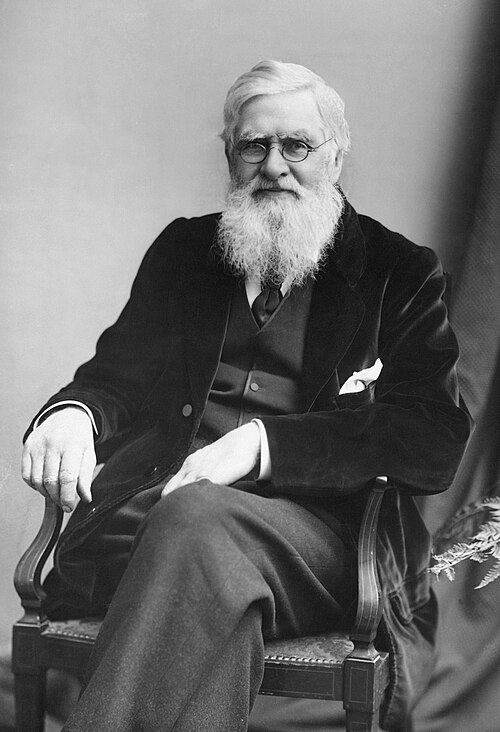
Alfred Russel Wallace
The self-taught naturalist who independently conceived evolution by natural selection and posted the theory to Darwin from a malarial hut in the Malay Archipelago.

Mary Anning
The Lyme Regis fossil hunter whose ichthyosaurs, plesiosaurs, and pterosaurs proved that the Earth was far older — and stranger — than anyone had imagined.

Ada Lovelace
The mathematician whose 1843 Notes on Babbage's Analytical Engine contain the first published computer program — and a vision of machines that could make music, not just sums.

Thomas Henry Huxley
'Darwin's Bulldog' — the combative anatomist who carried evolution into lecture halls, newspapers, and the famous Oxford debate of 1860.

William Thomson, Lord Kelvin
The Glasgow professor who gave the world the absolute temperature scale — and the telegraph cable that first joined Europe to America by wire.

Joseph Swan
The quiet chemist from Sunderland who showed a working electric light bulb to the public a full year before Edison — and lit the first house, street, and theatre by electricity.

Elizabeth Garrett Anderson
The first woman to qualify as a doctor in Britain — who found a legal loophole into medicine, then opened the door for every woman who followed.

Richard Owen
The anatomist who coined the word 'dinosaur' in 1842 and built London's Natural History Museum — Victorian Britain's most celebrated, and most feared, man of science.

Robert Koch
The German physician who proved that specific microbes cause specific diseases, identifying the bacteria behind anthrax, tuberculosis, and cholera.

James Young Simpson
The Edinburgh obstetrician who first used chloroform as an anaesthetic, ending the era of surgery endured awake.

Ignaz Semmelweis
The Hungarian doctor who showed that doctors' unwashed hands were killing new mothers — and was ignored for it.

William Henry Perkin
The eighteen-year-old who failed to make quinine and accidentally invented the world's first synthetic dye — mauve.

John Tyndall
The Irish physicist who proved that carbon dioxide and water vapour trap heat — the first experimental basis of the greenhouse effect.

Joseph Bazalgette
The engineer who ended the Great Stink by building London's sewer system — 82 miles of intercepting sewers that still serve the city today.

Mary Seacole
The Jamaican nurse turned away by the War Office who sailed to the Crimea at her own expense and nursed soldiers at the front.

Charles Babbage
The mathematician who designed the Analytical Engine in 1837 — a programmable computer, a century before electronics made it possible.