The Awakening Conscience
William Holman Hunt

📌 Pin it
A young woman rises suddenly from her lover's lap at the piano, her hands clasped, her eyes fixed on the light. She is a kept mistress in a furnished London room, and the song he has been playing — 'Oft in the Stilly Night', a ballad of lost innocence — has pierced her. In the mirror behind her, a sunlit garden glows: the innocent life she left, and the redemption she is turning toward.
Every object in the room is a clue, painted with Hunt's fanatical Pre-Raphaelite detail: the cat toying with a bird under the table, the glove discarded on the floor, the clock under a glass cover, the music of a sentimental song. The model was Annie Miller, the red-haired girl who modelled for half the Brotherhood. The picture was commissioned by the Manchester industrialist Sir Thomas Fairbairn.
At its Royal Academy exhibition in 1854 the painting baffled and offended in equal measure — one critic called it vulgar. John Ruskin rushed to its defence in a letter to The Times, explaining the symbolism detail by detail and calling the viewer a witness to human sorrow. It became the most argued-over picture of the decade, and the definitive Victorian painting of conscience itself.
Frequently asked
What is happening in The Awakening Conscience?
A kept mistress rises from her lover's lap at the piano: the song he is playing, 'Oft in the Stilly Night', has reminded her of her innocent past, and her conscience awakens. The sunlit garden in the mirror is the life she might return to.
What do the details in the room mean?
Hunt loaded the room with clues: the cat toying with a bird, the discarded glove, the clock under glass — each marks wasted time, a trapped creature, or a life thrown away.
Where is The Awakening Conscience?
Tate Britain, London.
Why it matters today
The Awakening Conscience invented the Victorian 'problem picture' — a painting that argues, in symbols, about a social question, and expects the viewer to argue back.
More in Art & Painters
All →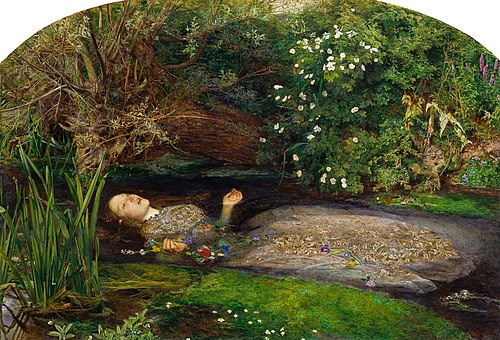
Ophelia
A drowned Shakespearean heroine, painted leaf by leaf on a Surrey riverbank — the image that made the Pre-Raphaelites immortal.

The Lady of Shalott
Tennyson's cursed weaver, caught at the moment she turns to look at Camelot — the most reproduced Victorian painting of them all.

Flaming June
A sleeping woman wrapped in translucent orange silk — the single most famous image of the Aesthetic movement, lost and found again.