The Palm House at Kew: A Victorian Glass Palace Full of Rainforest — and It's About to Close for Five Years
Built in 1844–48 from curved wrought iron and 16,000 panes of glass, Kew's Palm House is the first great glasshouse of the Victorian age — and with a five-year renovation starting in 2027, this winter is one of the last chances to see it as the Victorians left it.
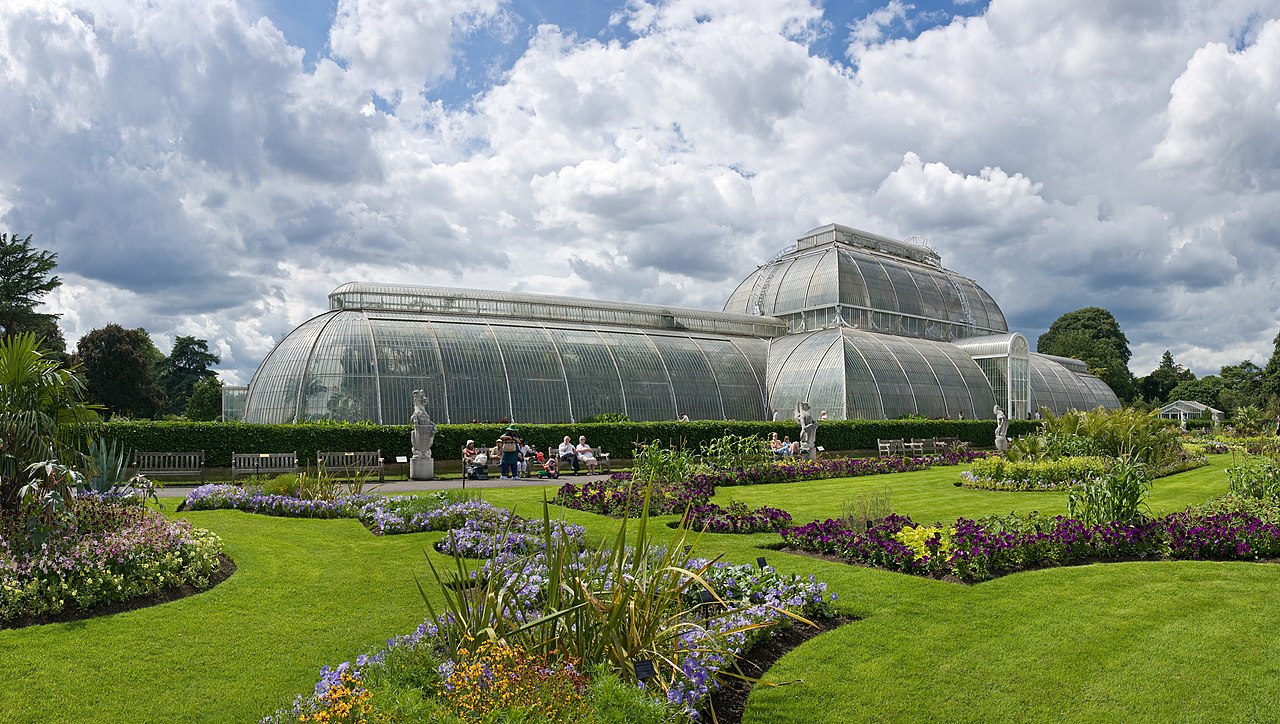
In south-west London stands a building that looks like an upturned ship's hull made of glass. The Palm House at the Royal Botanic Gardens, Kew, was built between 1844 and 1848 to a design by the architect Decimus Burton, with the ironwork engineered by the Dublin iron-founder Richard Turner. It was the first large-scale structural use of wrought iron anywhere, and it is still, nearly 180 years on, one of the most beautiful buildings in Britain. And there is a reason to go now: Kew has announced that the Palm House will close in 2027 for a five-year renovation, and its plants are already being moved out. This winter is one of the last chances to see the house as the Victorians left it.
The engineering was radical. The Palm House is 362 feet long, 100 feet wide and 19 metres high at its crown, held up by slender curved ribs of wrought iron and covered with some 16,000 panes of glass — many of them bent to follow the curve, a technique nobody had attempted at this scale before. Turner borrowed from shipbuilding: the ribs work like the frames of a hull turned upside down, and the whole structure is tied together with horizontal tubes containing prestressed cables. Two coal-fired boilers fed miles of hot-water pipes to keep the interior tropical through a London winter. It is Grade I listed, and Historic England calls it one of the boldest pieces of nineteenth-century functionalism in existence.
Step inside and the engineering disappears. The air is warm and damp, the light green, and the palms rise to a walkway 9 metres up that carries you into the crowns. The house's most famous resident stands at its southern end: an Eastern Cape giant cycad, Encephalartos altensteinii, brought to Kew in 1775 by Francis Masson, Kew's first plant hunter, who collected it in South Africa. It moved into the Palm House when the house opened in 1848 and has lived in a pot ever since — over four metres tall, more than a tonne in weight, growing about 2.5 centimetres a year, and the oldest potted plant in the world. It has produced exactly one cone in 250 years at Kew, in 1819. In 2027 it will be carefully moved to the Temperate House while the Palm House is restored.

The Palm House was only the first of Kew's Victorian glass palaces. The Temperate House, also designed by Burton, took decades to build — 1862 to 1899 — and opened in 1863 only three-quarters complete; at 628 feet long it is the largest surviving Victorian glasshouse in the world, twice the size of the Palm House, and it reopened in May 2018 after a five-year, £41 million restoration that replaced 15,000 panes of glass. The smaller Waterlily House, completed in 1852 with ironwork by Turner, was built to show off the giant Amazon waterlily Victoria amazonica — the leaf whose ribbed underside is said to have inspired Joseph Paxton's design for the Crystal Palace of 1851. And the Marianne North Gallery, completed in 1882 and funded by the painter herself, holds more than 800 of North's oil paintings of plants in their native habitats, hung in the geographical order of her travels.
What the glasshouses really display is the Victorian plant network. Kew was the hub of a global trade in living things: plant hunters sent specimens home in Wardian cases — the sealed glass boxes that let plants survive months at sea — and Kew distributed them onward to colonial gardens from Calcutta to Sydney. The tea in your cup, the rubber in your tyres, the cinchona bark that made quinine: all passed through Kew. The Palm House is the showroom that network built, a rainforest assembled by empire and kept alive by coal and iron.
Visiting now takes a little planning, and the winter season is the cheapest time to do it. From 12 November 2026 to 3 January 2027 the Gardens are open daily 10am to 3.15pm, with last entry at 2.30pm; they are closed in the daytime on 24 and 25 December. Off-peak adult admission is £17 booked online or £20 at the gate, children aged 4 to 15 pay £2 online, under-4s go free, and adult entry is £10 on Tuesdays until 29 December. Come by train to Kew Gardens station on the District line or London Overground, and use Victoria Gate, the nearest entrance to the Palm House. The Palm House itself is still open, but expect some plants already gone and a few bare beds as the move-out proceeds; the Waterlily House, Kew Palace, the Great Pagoda and Queen Charlotte's Cottage are all closed until spring 2027. Christmas at Kew, the evening light trail running on selected dates from 13 November, is a separate ticket.
Go on a grey November afternoon, when the glass is steamed and the garden outside is bare. Climb to the walkway, look down through the fronds at the cycad that sailed from South Africa before the French Revolution, and remember that this is a building the Victorians built to hold the whole tropical world under one roof — and that after next year, it will be five years before you can stand inside it again.
More from the story


Keep exploring
The Wardian Case
The sealed glass box that moved the plant kingdom — and made the Palm House's rainforest possible.
Charles Darwin
Darwin advised Marianne North on her travels and corresponded with Kew's directors — the science behind the glasshouses.
Alfred Russel Wallace
The great plant and animal hunter of the Amazon and the Malay Archipelago — his fieldwork shaped evolution, and his specimens stocked the era's museums.