The Fighting Temeraire
J. M. W. Turner

📌 Pin it
In the summer of 1838, Turner watched a small black steam tug tow an old warship up the Thames toward the breaker's yard at Rotherhithe. The ship was HMS Temeraire, a 98-gun veteran of Trafalgar, where she had fought beside Nelson's flagship Victory. Turner painted her last voyage as a sunset: the white warship ghostly in the evening light, the squat tug beside her belching smoke — sail giving way to steam in a single frame.
Exhibited at the Royal Academy in 1839, the picture thrilled a public that still remembered Trafalgar. Turner loved it above his other works and refused to sell it, turning down large offers; he left it to the nation in the Turner Bequest of 1856. In 2005 it was voted the nation's favourite painting in a BBC Radio 4 poll, and it now appears on the Bank of England's £20 note.
It is a painting about endings that refuses to be sad: the Temeraire is still beautiful, still upright, still lit like a hero. Turner, who had made his name painting storms and shipwrecks, here painted the quietest drama of his career — a great ship going home to die, in the finest light he ever mixed.
Frequently asked
What ship is the Fighting Temeraire?
HMS Temeraire, a 98-gun warship that fought at Trafalgar in 1805, where she came to the aid of Nelson's flagship Victory. By 1838 she was obsolete and being towed to the breaker's yard.
Where is The Fighting Temeraire?
The National Gallery, London, where it arrived with the Turner Bequest in 1856.
Why is the tugboat in the painting significant?
The small black steam tug is the point of the picture: the age of sail, embodied by the majestic Temeraire, is being pulled to its death by the age of steam.
Why it matters today
The Temeraire made the passing of sail into steam the great elegy of British art — and, on the £20 note, it is the Victorian painting most Britons carry in their pockets.
More in Art & Painters
All →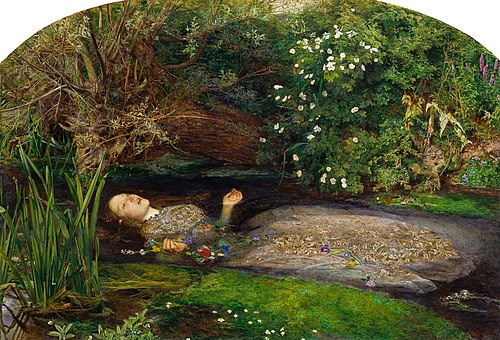
Ophelia
A drowned Shakespearean heroine, painted leaf by leaf on a Surrey riverbank — the image that made the Pre-Raphaelites immortal.

The Lady of Shalott
Tennyson's cursed weaver, caught at the moment she turns to look at Camelot — the most reproduced Victorian painting of them all.

Flaming June
A sleeping woman wrapped in translucent orange silk — the single most famous image of the Aesthetic movement, lost and found again.