Queen Victoria Saw the Modern World Being Invented
Born in 1819 into a horse-drawn, candle-lit world, she died in 1901 with railways, telephones, electric light, motor cars, and cinema — the modern world arrived inside a single lifetime.

Queen Victoria was born on 24 May 1819 and died on 22 January 1901, after a reign of more than sixty-three years. She was born before the railway age — the first public steam railway opened in 1825, when she was six — before photography, which was announced in 1839, and before the electric telegraph reached the public in 1837. She died after the telephone, electric light, the motor car, cinema, and X-rays. The modern world did not arrive in the twentieth century. It arrived inside her lifetime, and she sat at the very centre of it.
Start with moving. When Victoria was a child, long journeys meant horses, coaches, and canals. The Stockton and Darlington Railway opened in 1825, the Liverpool and Manchester line followed in 1830, and London got the world's first underground railway in 1863. By 1900 Britain had around 22,000 miles of railway track, and steamships had shrunk the Atlantic crossing from weeks to a matter of days. The safety bicycle of the mid-1880s put personal speed within ordinary reach, and then came the motor car: Karl Benz patented his in 1886, her son Edward took the first royal ride in a Daimler in 1896, and the first royal car was delivered in 1900. Victoria herself disdained the new motor car — she saw it arrive and refused it, which is its own kind of verdict on the future.
Then communicating. The Penny Black of 1840 meant a letter could go anywhere in Britain for a penny, and the post became something ordinary people used every day. The electric telegraph, patented by Cooke and Wheatstone in 1837, grew into a network that crossed the Atlantic by cable in 1866, so a message that once took weeks by ship now took minutes. The telephone was patented in 1876, and on 14 January 1878 Alexander Graham Bell demonstrated it to the Queen herself at Osborne House, placing calls to Cowes, Southampton, and London — the first publicly witnessed long-distance telephone calls in Britain. She called the process 'quite extraordinary', though the sound was 'rather faint', and asked to buy the equipment. Wireless telegraphy was being demonstrated in her final years, though the first transatlantic wireless signal came months after her death.
Then seeing, and light. Photography was announced in 1839, two years into her reign, and Victoria and Albert were among its earliest royal patrons — by the time she died, the family snapshot was ordinary. Gaslight, the wonder of her youth, gave way to electric light in the late 1870s, and moving pictures arrived in the mid-1890s; her Diamond Jubilee procession of 1897 was captured on film. X-rays were discovered in 1895, letting doctors see inside the living body for the first time. A child born in 1819 could not have imagined a photograph, let alone a moving one. An old woman dying in 1901 had been photographed thousands of times.

Medicine and science changed as fast as machines. Ether anaesthesia arrived in 1846 and chloroform in 1847, and Victoria's own use of chloroform for the birth of Prince Leopold in 1853 — administered by John Snow — did more than any lecture to make painless childbirth respectable. Joseph Lister's antiseptic surgery of 1867 transformed the operating theatre from a place of likely death into one of likely recovery, and germ theory rewrote what disease was. Charles Darwin published On the Origin of Species in 1859, mid-reign, and rewrote humanity's place in nature. And London's great sewers, built under Joseph Bazalgette between 1859 and 1865, together with clean water, turned the tide on cholera in the city she ruled from.
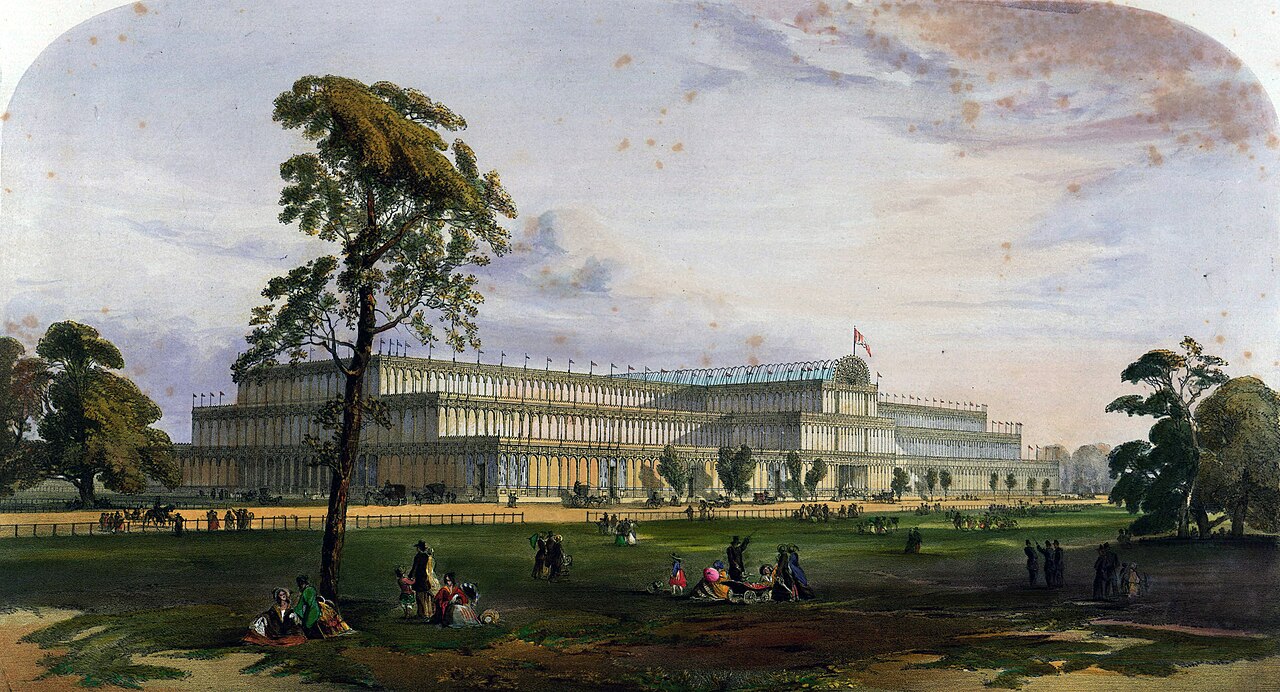
Society changed around her just as thoroughly. The census of 1851 found, for the first time in history, that a majority of Britons lived in towns — Britain became the first decisively urban society, and England and Wales nearly doubled in population, from 16.8 million in 1851 to 30.5 million in 1901. Elementary education became compulsory in 1880, and the Married Women's Property Acts of 1870 and 1882 let married women own property in their own right; the women's movement grew through her reign even though she herself had no sympathy for votes for women. The Great Exhibition of 1851, which drew more than six million visitors to Hyde Park, was the new industrial world putting itself on display — and the Queen who opened it was only thirty-two.
The world itself shrank. She was proclaimed Empress of India in 1877, and the empire reached its greatest extent during her reign — but steam, the telegraph, and the cable bound it together in a way no earlier empire had known. A message to India that once took months by ship could now arrive the same day. The map was still coloured pink, but the speed at which it could be governed, traded with, and reported on was entirely new. Distance, which had defined every earlier age, stopped being the limit it had been.
She died at Osborne House on 22 January 1901, in a world unrecognisable from the one she was born into — and almost everything we still live with arrived during her lifetime. The rail network, the postal system, the photograph, the telephone, electric light, the motor car, the cinema: all of it came into being between 1819 and 1901. She tried the telephone before almost anyone, used chloroform before it was respectable, and refused the motor car. The future arrived in her drawing room, and she picked which parts to welcome. That is the real measure of her reign — not just that she ruled for sixty-three years, but that the world was reinvented while she did.
More from the story



Keep exploring
The Penny Black: The Little Black Stamp That Taught the World to Write
The penny post of 1840 is one of the changes in this story — the stamp itself, and why it mattered.
The Electric Telegraph
The wires that shrank the world: how the telegraph reached from London to the ends of the empire.
Dressing Queen Victoria for Christmas 1848 — and the Tree the Film Doesn't Show
Victoria herself, at home: the Christmas tree, the family, and the image-making she understood so well.